New Rivalries on the Leaderboard: Claude Sonnet 5, Seed 2.1, and GLM-5.2
A technical review of next-generation AI models released in June 2026 that break new ground in agentic AI and coding.
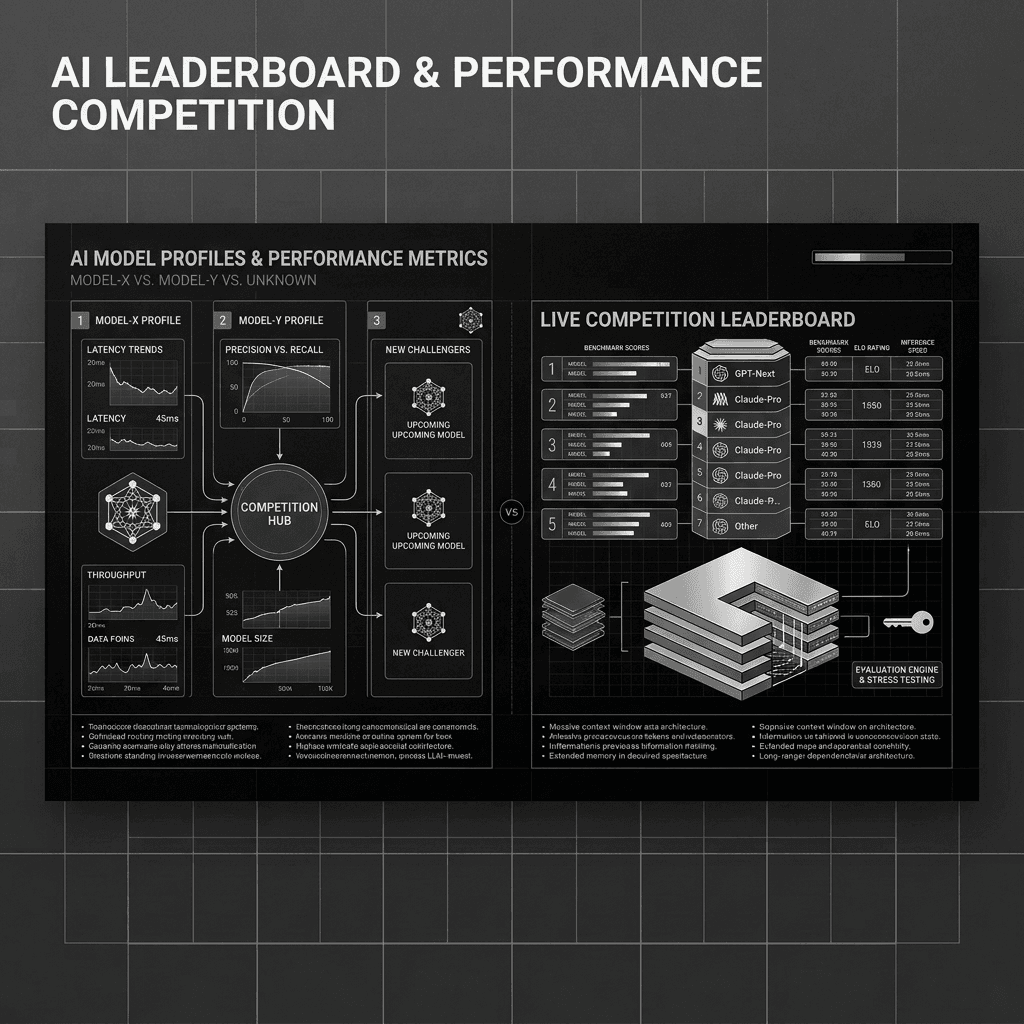
Late June and early July 2026 have been a period of rapid-fire announcements of next-generation models that are revolutionizing autonomous tasks (Agentic AI) and coding. Hailing from both proprietary and open ecosystems, these 3 models are at the center of the AI race.
Here are the models making waves in the industry:
1. Claude Sonnet 5 (Anthropic)
- Release Date: June 30, 2026
- Focus: Multi-step Agentic Workflows and Professional Coding.
This new version of Anthropic’s most popular tier, Sonnet, has become the new default model for “Claude Free” and “Pro” plans. The model’s biggest claim is delivering reasoning capabilities on par with the previous generation flagship, Opus, but at a much lower cost and higher speed.
Technical Capacity: It boasts a massive 1-million-token context window. Furthermore, its “Adaptive Thinking” feature, which scales computational effort based on task difficulty, makes it one of the most ambitious assistants for coding and browser/terminal usage.
2. Seed 2.1 (ByteDance / Volcano Engine)
- Release Date: June 23, 2026
- Focus: End-to-End Engineering Delivery.
Specially trained by the Chinese tech giant ByteDance for the “Coding and Agent Era.” It doesn’t just write code; it can manage a software developer’s entire lifecycle, from requirements analysis to environment setup and bug fixing.
Versions: Released as two main models: Seed 2.1 Pro for long-chain tasks requiring deep reasoning, and low-latency Seed 2.1 Turbo for high-volume production scenarios.
3. GLM-5.2 (Z.ai / Zhipu AI)
- Release Date: Mid-June 2026
- Focus: Repository-Scale Software Engineering and Autonomous Systems.
Unlike closed APIs, this model stands out as an Open-Weight model (MIT License). Utilizing a Mixture-of-Experts (MoE) architecture, it supports a 1-million-token context window, much like Claude Sonnet 5. It is considered one of the models with the highest performance/cost ratio in the open-source world.
Conclusion
As of July 2026, the leaderboard is no longer a monopoly of big tech giants. The rise of open models and highly specialized agentic models offers broader and more efficient options for tech teams.